Building a Proactive Supplier Compliance Program That Catches Risk Early
Healthcare supplier compliance moves. Rules change, supplier relationships change, and small gaps grow into problems that reach patients and budgets. A proactive monitoring program catches issues early rather than cleaning up afterward, and it does that through measurable indicators and escalation paths that exist before anyone needs them.
The pressure is increasing. Supply networks are more distributed than they were five years ago and transparency obligations keep expanding into new markets. Most teams are working with oversight processes designed for a simpler picture.
What proactive oversight actually changes
Traditional supplier oversight waits for a trigger. An inspection, a data problem, a complaint from the field. Proactive monitoring reverses the sequence by watching signals that tend to precede those events.
A proactive program will:
- Track leading indicators rather than only past failures
- Use risk scores to direct attention instead of relying on instinct
- Connect data across markets rather than leaving it in local systems
- Give leaders views they can act on without a data request
The payoff is broader than avoiding penalties. It covers clinical continuity, defensible HCP interactions, and the hidden costs that come with rework and emergency resourcing.
Building a risk-based monitoring framework
Not every supplier warrants the same attention. A local facilities vendor should not carry the same review burden as a clinical trial lab or a specialty distributor handling high-risk therapies.
Start by tiering suppliers against objective criteria:
- Spend and contract value
- Direct impact on patients or product
- Geography and local regulatory pressure
- History of findings or red flags
Those criteria produce groupings such as critical clinical suppliers, specialty vendors, distributors, third-party intermediaries, data processors, and lower-risk service providers. Each tier then gets defined expectations for monitoring frequency, depth of due diligence at onboarding, documentation requirements, and planned touchpoints with legal and quality.
The framework also has to stay aligned with obligations that cut across suppliers: transparency reporting, anti-bribery and corruption, sanctions screening, data privacy, and HCP engagement rules. A centralized platform helps here, mainly because rules, controls, and supplier data stop living in separate folders and inboxes.
The signals most programs never look at
Most supplier oversight runs on what the supplier tells you. Questionnaires, attestations, and whatever surfaces during onboarding. That’s a narrow view, and it’s the view the supplier controls.
Two other sources carry more signal.
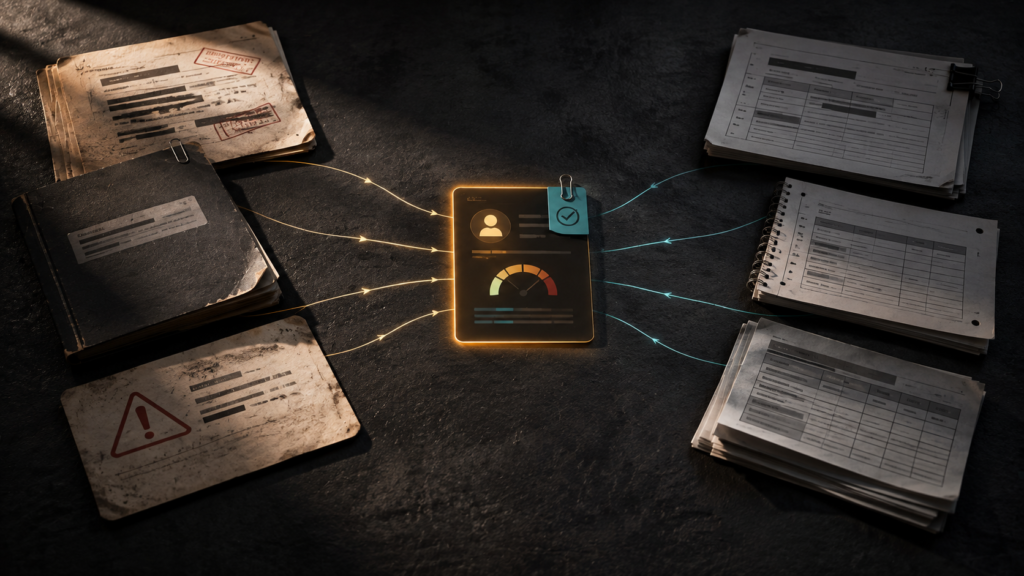
External intelligence: FDA warning letters, litigation records, recalls, and GMP non-compliance alerts are public, and they often predate anything a supplier discloses. Our Supplier Risk Assessment solution reads these alongside submitted documentation, specifically to find the omissions. A questionnaire that looks complete against a warning letter that isn’t mentioned is a different conversation than a questionnaire reviewed on its own.
Your own history with that supplier: Deviations, CAPAs, complaints, and batch rework already sit in your quality systems, usually attributed to a product or a site rather than to the supplier behind them. Read by supplier, that history is a risk profile you already paid to collect. It’s also the fastest way to spot the vendor whose fourth minor finding nobody connected to the first three.
Bringing both together produces a profile rather than a snapshot, and it makes onboarding faster rather than slower, because automated risk scoring handles the routine cases and reserves review time for the ones that need it.
KPIs that make oversight measurable
Clear metrics give compliance a shared language with legal, quality, procurement, and finance. Without them, supplier oversight stays a matter of opinion.
Operational indicators:
- On-time delivery of compliance and due diligence documentation
- Percentage of suppliers with a current risk profile
- Contract coverage rate across active suppliers
- Average onboarding time with all checks completed
Risk and quality indicators:
- Supplier-related incidents by type, covering quality, privacy, bribery, sanctions, and transparency
- CAPA closure rate against agreed service levels
- Repeat findings by supplier and by risk tier
- Trend lines by region, portfolio, or business unit
Designing escalation paths before you need them
The worst time to design an escalation path is during an incident. Triggers, owners, and response times should be settled in advance.
Thresholds worth setting to raise an automatic flag:
- Failed sanctions or watchlist screening
- A suspected or confirmed data privacy breach
- Repeated late responses on CAPA actions
- Adverse quality events tied to one supplier or site
From there a tiered model keeps things moving. Lower-risk issues stay with procurement and the local business owner. Medium and high issues pull in compliance, quality, and legal. Matters involving potential bribery or patient impact go to senior leadership on a defined clock.
These flows work when they live inside case management rather than in email. Every step, decision, and corrective action gets logged and stays reviewable across markets, and dashboards route cases to the people who need them rather than waiting for someone to notice.
Making improvement part of the operating rhythm
A proactive program is never finished. It grows with the business and with regulation, and the data from monitoring and case work should feed that growth rather than accumulate in reports.
Habits that make this real:
- Updating policies, training, and due diligence checklists on a set cycle
- Refreshing contract templates with lessons from recent incidents
- Quarterly reviews with procurement, quality, and business owners
- A simple compliance scorecard inside supplier business reviews
- Lessons learned sessions after significant issues or inspections
Audit planning is worth pulling into this rhythm too. Rather than building a vendor audit agenda from a template, AI-assisted audit planning can read contract terms, prior audit results, open quality issues, and delivery performance, then generate an agenda and question set aimed at where the risk actually sits for that supplier. The prep time drops and the audit covers what matters.
Where a risk is identified, the more useful output is a mitigation plan rather than a score. Recommendations tailored to the type and severity of risk are what turn a supplier profile into a decision about whether to onboard, monitor more closely, or step back.
Where to start
A gap review is usually enough to begin. Look at your current KPIs, how clearly suppliers are tiered, how well escalation paths hold up under pressure, and how much of your monitoring still depends on manual work in email. A few targeted changes often improve visibility more than a system replacement would.
Most organizations that do this well start narrow. One or two critical supplier groups, often clinical trial vendors or specialty distributors, with the model extended to more supplier types and countries once the governance and metrics hold.
Cresen Solutions works on both sides of this. Our consultants help design the risk framework, monitoring plan, escalation model, and metrics. Our platform handles the supplier profiling, external risk intelligence, automated scoring, mitigation recommendations, and performance tracking that make the framework operate rather than sit in a document.
See where your supplier risk actually sits
If your supplier oversight depends on what suppliers tell you, there’s usually more signal available than you’re using. Our Supplier Risk Assessment solution builds a profile from your own quality history alongside external regulatory and legal intelligence, and recommends what to do about what it finds. Contact us or request a demo and we can walk through it against your current process.