When Healthcare Engagement Compliance Breaks Down in the Field
Healthcare engagement compliance sounds like dry policy talk. For field teams, it is anything but. It is what keeps everyday work with healthcare professionals defensible when a regulator, an auditor, or a headline puts your program under the microscope. When it breaks in the field, it can put licenses, careers, and patient trust at risk in ways that are hard to undo.
Healthcare engagement compliance means every interaction with healthcare professionals (HCPs), healthcare organizations, and patient groups is appropriate and well documented in every market you operate in. That covers advisory boards, speaker programs, sponsorships, grants, and digital touchpoints. Mid-year is an especially exposed window. Conferences, advisory boards, and local events stack up just as monitoring capacity, budgets, and targets are under pressure.
When field engagements put your license at risk
Consider a familiar scenario. A field team runs an advisory board. A few extra attendees join. A meal gets upgraded. The agenda shifts. Nobody pauses to update the approval, because people are busy and the event feels routine. Months later, an audit surfaces irregular transfers of value tied to that advisory board. Now there are questions, internal reviews, and possible regulatory interest.
Breakdowns like this usually happen in what teams call the last mile of execution. It’s the point where global policy meets real life, and risk peaks in places like:
- Live and virtual events
- Speaker programs and trainings
- Sponsorships and grants
- One-on-one and small group digital engagements
At Cresen Solutions, we see how fast things move in the field, especially during busy seasons. Our focus is helping life sciences and healthcare teams keep those real world engagements compliant, even when time is short and rules keep shifting across markets.
How engagement compliance breaks in the real world
On paper, global policies and standard operating procedures are clear. In practice, they often lose their shape on the way to the field.
Policy lost in translation
Global rules can feel too high level for local teams juggling multiple brands, indications, and markets. Local affiliates may interpret caps, hospitality limits, or grant rules differently. That leads to:
- Inconsistent approvals for fees and honoraria
- Different readings of what counts as education vs promotion
- Local habits that quietly drift from global expectations
The intent is usually good. The outcome can still breach fair market value benchmarks, anti kickback laws, or country-specific transparency rules.
Fragmented tools and manual workarounds
Many teams still live in spreadsheets, email chains, and a mix of CRM and event tools that do not talk to each other. When that happens, key HCP details get scattered across systems, prior payments and conflicts of interest become hard to see, and mid-year conference season adds a heavy manual reconciliation burden.
Without one view of the HCP engagement lifecycle, no one sees cumulative exposure until it is too late. That is why purpose built platforms like EngageMate exist, a single system that handles needs assessment, nominations, FMV tiering, contracting, and closeout in one workflow, with debarment and sanction screening built in.
Limited line of sight for compliance leaders
Headquarters sees policy and high-level numbers. Local teams see day to day events. The gap between those views is where problems grow. Issues typically surface only during retrospective audits, external reviews, or new market entry projects. By then, the options narrow to remediation and possibly self-disclosure.
Cresen’s MonitorMate platform is designed to compress that gap by centralizing global monitoring and risk assessment activity, so risk patterns are visible while there is still time to act on them.
Hidden costs of weak healthcare engagement compliance
When healthcare engagement compliance breaks, the damage does not stop at a process chart. It hits three fronts that every leader watches.
Regulatory and financial consequences
If engagement practices cross lines set by anti-bribery, anti kickback, or transparency laws, companies can face fines, legal settlements, or corporate integrity agreements. Misclassified or missed transfers of value can trigger multi-country investigations. Cleaning up history is painful. It usually involves pulling old records, paying for external legal support, and living with long-term reporting duties.
Reputational damage and patient trust
News about inappropriate payments, lavish hospitality, or unusual sponsorships spreads fast. It raises doubts about prescribing decisions, makes patient groups step back from partnerships, and shapes how payers and authorities view your next access request. Once that trust is shaken, rebuilding it takes time and steady evidence of better behavior.
Operational drag and lost innovation time
When a crisis hits, leaders and field teams pull attention away from patients and science. We see it repeatedly: energy diverted from launches and medical education, emergency rules that over-control normal activities, heavier processes that frustrate the field. A proactive, AI-enabled approach can flip this. Good controls prevent issues without blocking legitimate engagement.
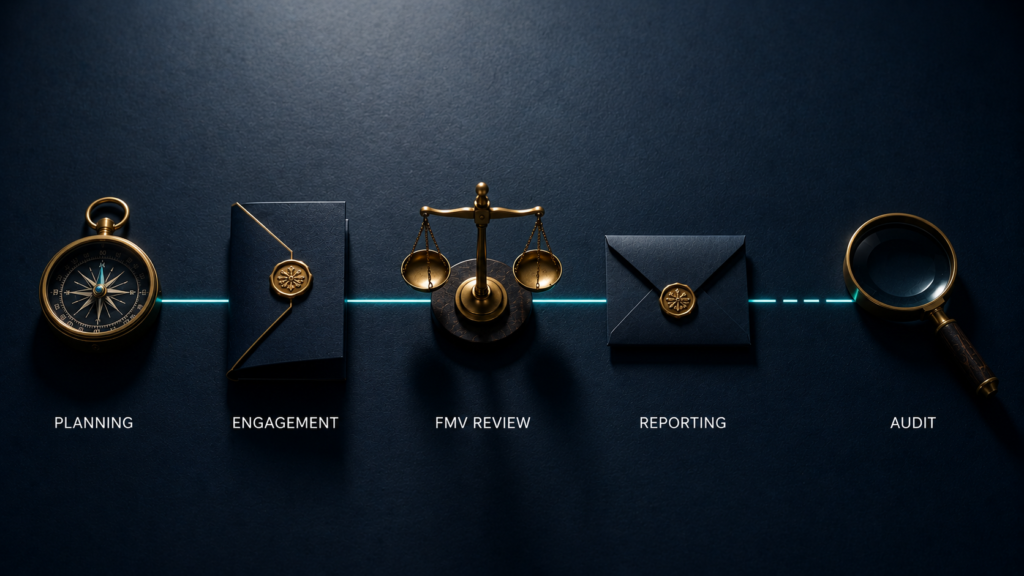
Common failure points across the HCP engagement lifecycle
Risk does not sit in one moment. It shows up at every stage of the HCP engagement lifecycle.
Risky planning and HCP selection
Problems often start early, when planning is rushed:
- Overreliance on the same high-prescribing or high profile HCPs
- Weak or missing fair market value benchmarks
- Limited checks on prior engagements or total annual value
With AI-supported tools such as EZPredict, patterns that look off – frequent use of one HCP, or payments outside normal ranges can be flagged before an engagement is approved rather than months later.
Execution gaps at events and meetings
Even the best plan changes on the day. Risk grows when on site shifts are not recorded:
- Last minute attendee swaps that bypass pre-checks
- Meal upgrades or extra sessions that exceed approval
- Poor notes on what actually happened vs what was planned
Engagement platforms with real time visibility make it easier for teams to log changes, stay within caps, and correct course while an event is still live, rather than reconstructing it during an audit.
Documentation, transparency, and remediation
After an engagement, documentation is where stories must line up. When it does not, transfers of value get underreported or misaligned with local rules, remediation actions fix symptoms rather than root cause, and lessons from one region never reach another. For companies operating across multiple reporting jurisdictions, transparency tools like SpendMate close the gap between engagement records and the transfers of value reports that regulators expect.
Integrated compliance platforms connect issues, investigations, and forward-looking monitoring so each incident improves the system instead of repeating it.
Building resilient, AI-enabled field compliance
A resilient field compliance program is more than a stack of policies. It is something people feel in the tools they use every day.
Embedding compliance in everyday workflows
Instead of asking teams to memorize long rules, place the guidance inside the tools they already use. That looks like real time checks on spend and participants, role-based views so reps, MSLs, and planners only see what they need, and clear prompts when something moves outside policy. At Cresen Solutions, our goal is to turn complex global rules into simple, on-screen help that fits how field users actually work.
Using AI to monitor, predict, and prevent risk
AI models can quietly scan engagement data in the background and raise flags when patterns don’t look right. That includes unusual spend in a region or product area, HCP combinations that resemble earlier high-risk scenarios, or repeated issue themes across regions that suggest a process gap rather than a one off mistake. With predictive analytics and near real-time dashboards, compliance teams gain time to act early instead of reacting after an investigation.
Aligning global standards with local reality
The final piece is balance. Global standards build consistency. Local rules and culture shape how work actually happens. Strong programs centralize core policies while allowing local tailoring, keep a shared language for engagement types and risk categories, and blend technology with practical consulting to make global rules workable in every market.
At Cresen Solutions, we support life sciences and healthcare organizations globally, bringing AI-powered platforms like EngageMate, MonitorMate, and EZPredict together with deep compliance consulting so field engagement becomes a source of strength rather than a source of worry.
Strengthen compliance while deepening patient engagement
If you are ready to reduce risk and rebuild patient trust, our specialists can help you assess and optimize your current processes for healthcare engagement compliance. At Cresen Solutions, we work with your team to align workflows, technology, and documentation with regulatory expectations and operational goals. Contact us to discuss your priorities and outline a clear, actionable path forward.